2026 . 04 . 15
INTERMOLD Osaka 2026
How Does Metal 3D Printing Make Badminton Shuttlecock Molds More Durable and More Productive?
Watch the full presentation here : https://www.youtube.com/watch?v=wIJEUKl-i8o
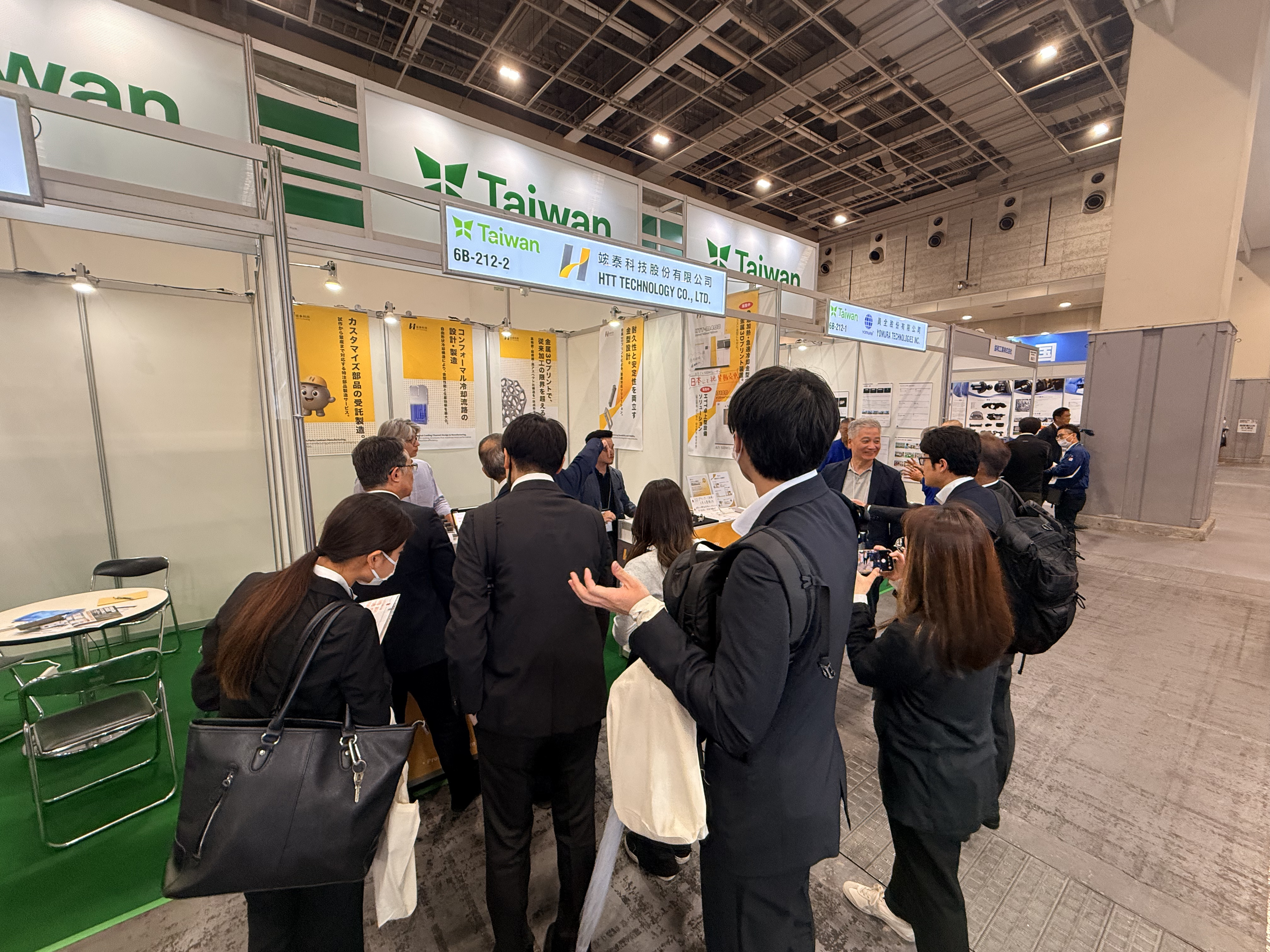
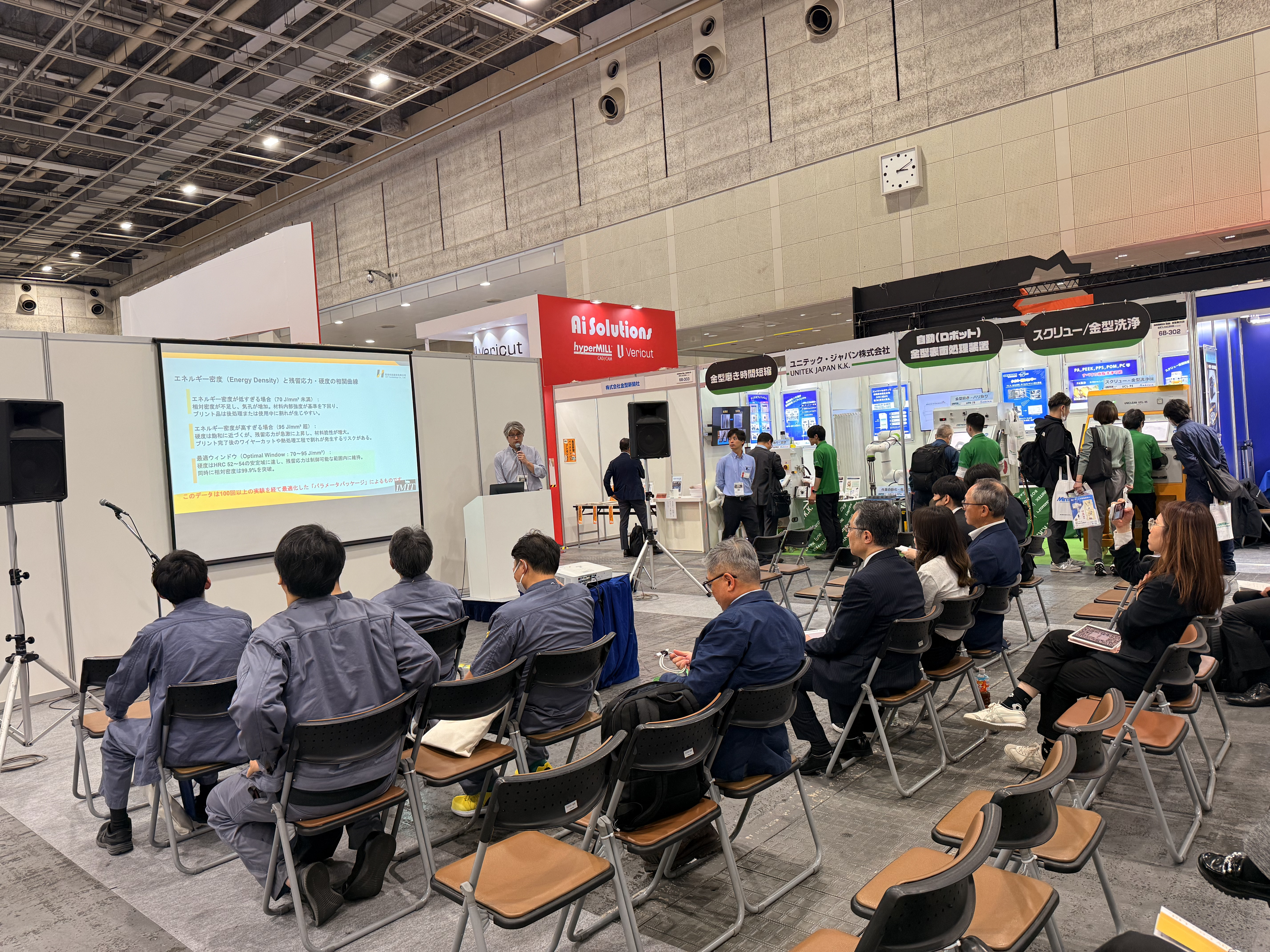
At the 2026 INTEX Osaka exhibition, HTT's presentation focused on the development of injection molds for plastic badminton shuttlecock heads. By integrating Conformal Cooling Design and Micro Venting Technology, we successfully overcame the performance limitations of conventional mold manufacturing and achieved significant improvements in both productivity and mold durability.
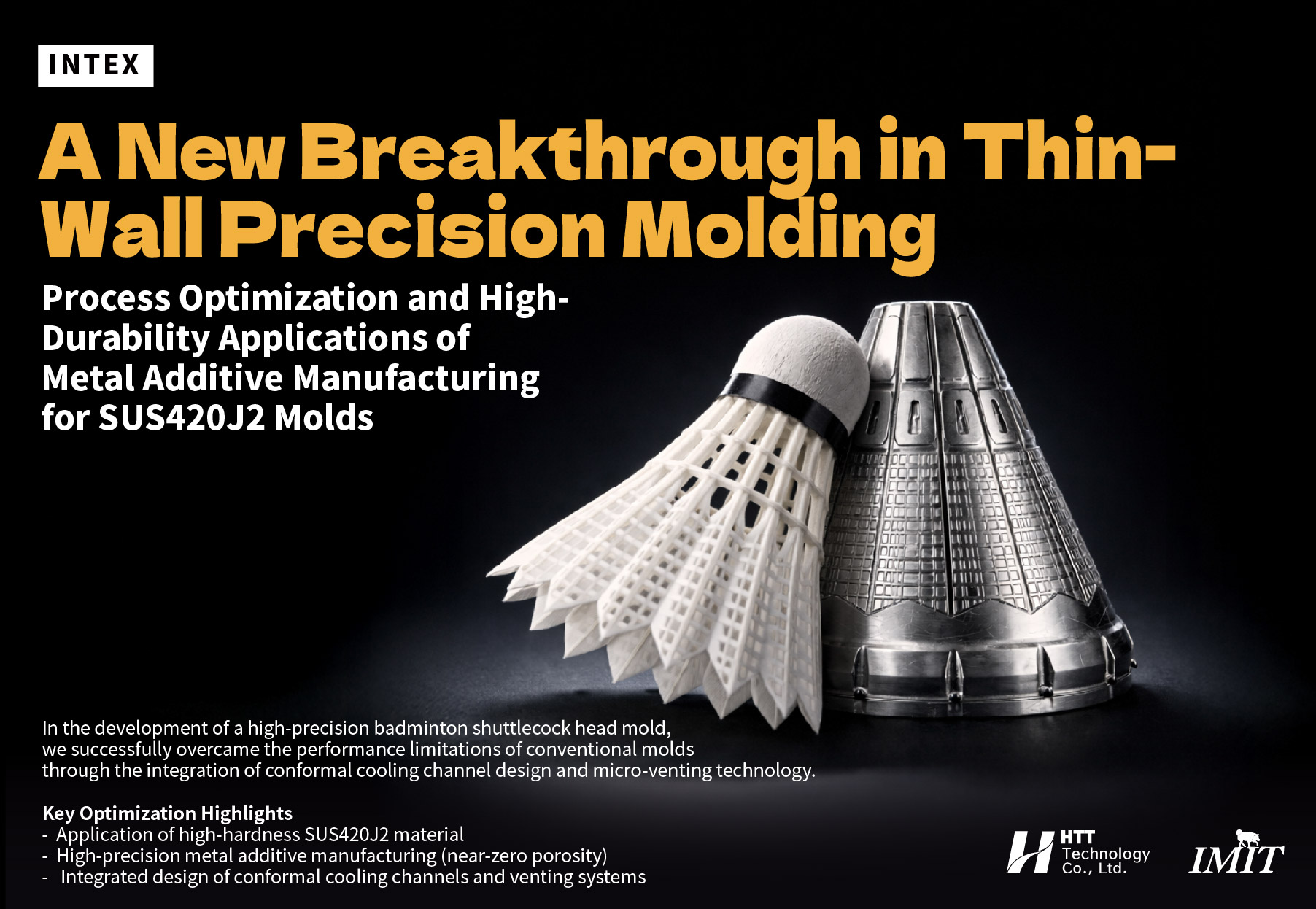
When people see a badminton shuttlecock, few realize that this seemingly simple product requires a highly precise mold to ensure stable, high-volume production. During the injection molding process of shuttlecock heads, molds must withstand continuous high-frequency production cycles while maintaining consistent dimensional accuracy and product quality. As a result, cooling efficiency, venting performance, and mold durability directly affect product quality and manufacturing costs.
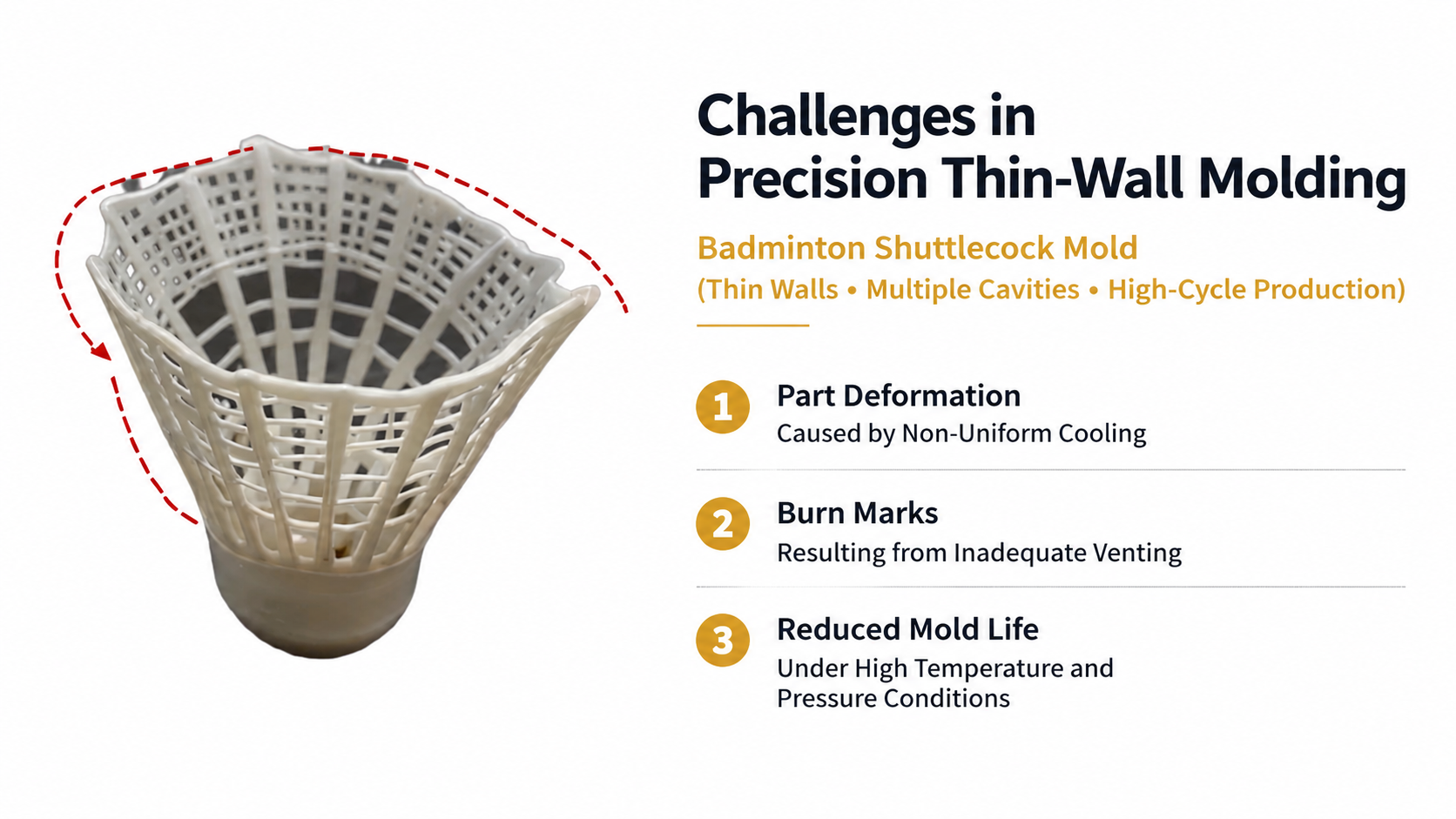
Challenges of Conventional Mold Design
Traditional mold manufacturing has long faced two major challenges.
Limited Cooling Efficiency
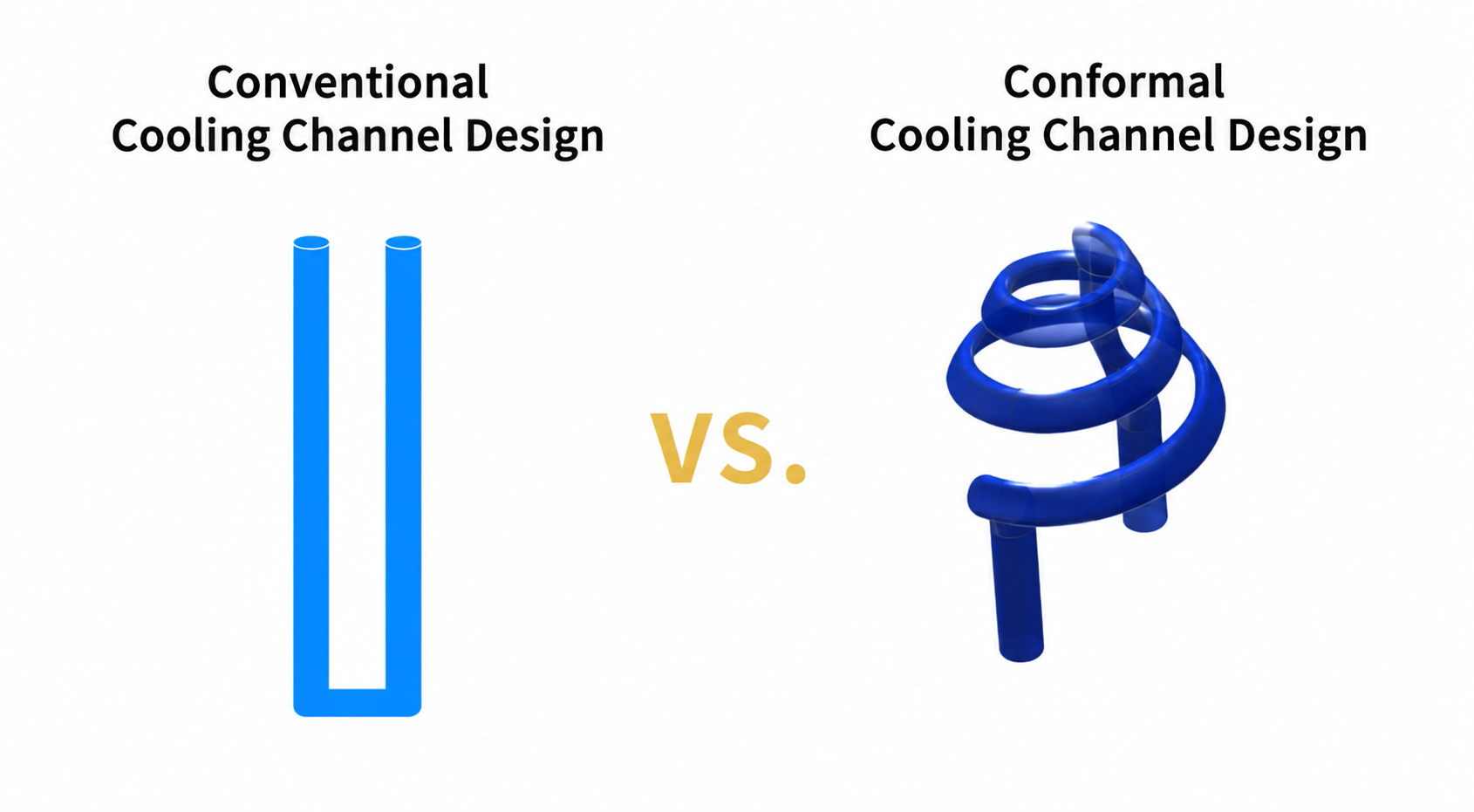
Conventional machining methods can only create straight-line cooling channels. As a result, localized heat accumulation often occurs inside the mold, leading to uneven cooling, longer cycle times, and inconsistent product quality.
Insufficient Venting Performance
During injection molding, trapped air must be evacuated efficiently as molten plastic fills the cavity. Poor venting can result in defects such as air traps, burn marks, and short shots, ultimately reducing production yield and process stability.
To address these challenges, HTT combined advanced metal additive manufacturing with innovative mold engineering to develop a next-generation mold solution.
Key Technologies
Conformal Cooling
Unlike traditional straight cooling channels, conformal cooling channels are designed to follow the geometry of the molded part. This allows the cooling system to be positioned closer to critical molding areas, resulting in faster and more uniform heat dissipation.
The benefits include reduced cooling time, improved dimensional stability, and enhanced overall production efficiency.
Micro Venting Technology
Leveraging the design freedom provided by metal 3D printing, HTT incorporated micro-scale venting structures directly into the mold.
These precisely engineered venting features allow trapped gases to escape efficiently during molding while preventing molten plastic leakage. The result is a significant reduction in defects and improved production consistency.
Why SUS420J2?
Material selection is just as important as structural design.
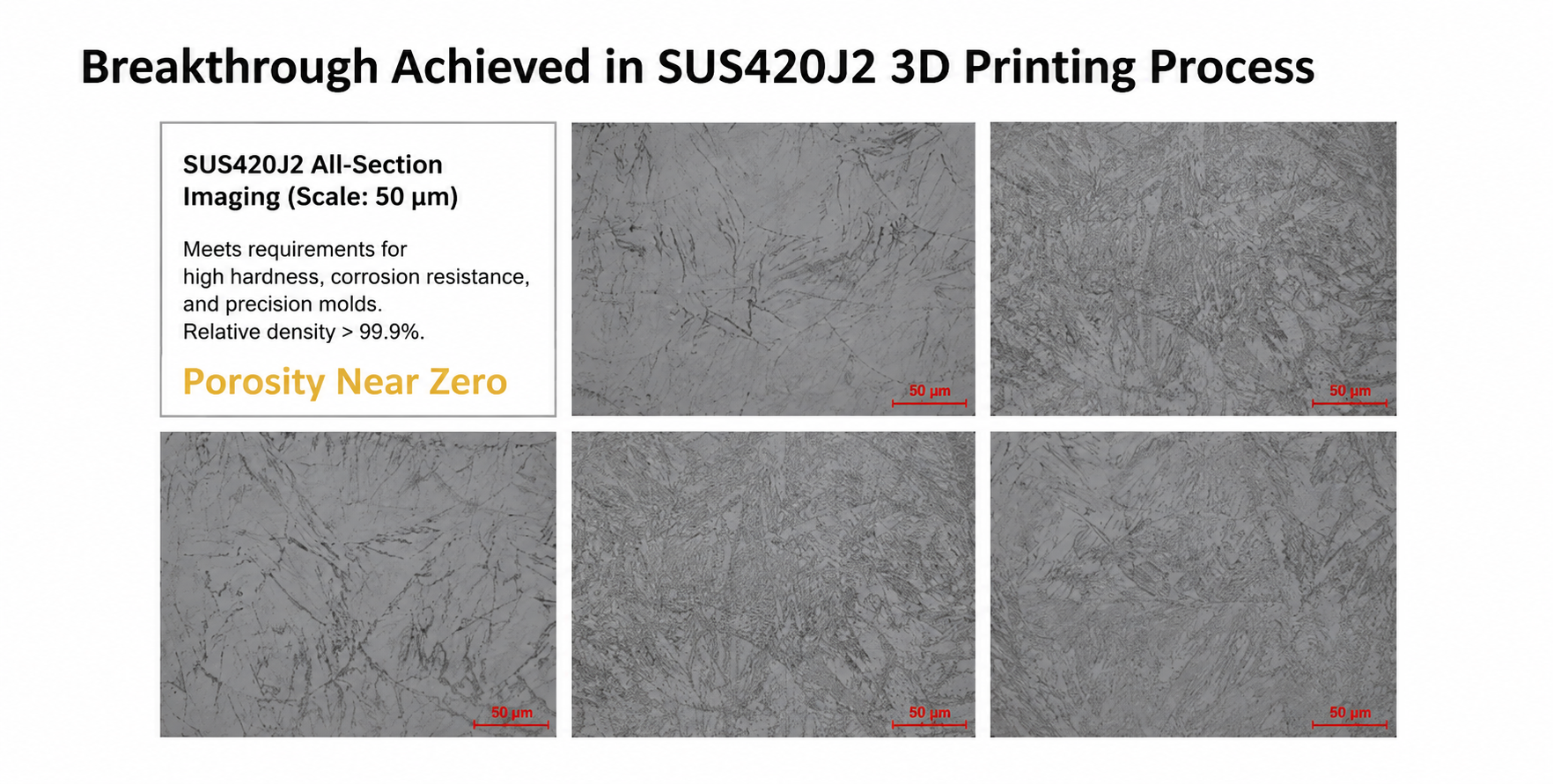
This project utilized SUS420J2 high-hardness mold steel, manufactured using high-precision metal 3D printing technology. The resulting components exhibit near-zero porosity, delivering exceptional strength, wear resistance, and long-term operational reliability.
Results Achieved
Through the comprehensive optimization of materials, design, and manufacturing processes, HTT successfully surpassed the performance limits of conventional molds and achieved the following results:
- Injection molding tool life exceeding 1 million cycles
- 42% increase in production efficiency
- Significant reduction in defect rates
- Improved molding stability and product consistency
Metal 3D Printing: More Than a Manufacturing Process
Metal additive manufacturing is not merely a new production technology—it represents a transformation in mold design philosophy.
Complex internal features that were previously impossible to manufacture, such as conformal cooling channels, intricate flow paths, and micro venting structures, can now be realized through advanced metal 3D printing.
By combining unprecedented design freedom with advanced manufacturing capabilities, molds are evolving from simple production tools into strategic assets that enhance efficiency, quality, and competitiveness.This vision continues to drive HTT's investment in metal additive manufacturing technologies, enabling us to create innovative solutions and unlock new possibilities for the precision manufacturing industry.